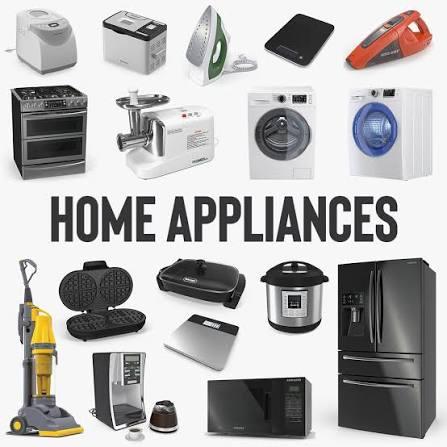
BIS ISI MARK HOME APPLIANCES CERTIFICATION
BIS certification for electrical appliances is now mandatory in India under the newly notified Safety of Household, Commercial and Similar Electrical Appliances (Quality Control) Order, 2026 (S.O. 1739(E)). Published on 6 April 2026, this directive completely replaces the previous QCO 2025, meaning the older March 19, 2026 deadline is no longer valid.
Under the new regulations, 90 distinct appliance categories must comply with IS 302 (Part 1):2024 / IEC 60335-1:2020 standards and officially display the ISI Mark.
Mandatory Regulatory Deadlines for Home Appliances
The Quality Control Order mandates that household electrical appliances must carry the ISI mark if they run on single-phase voltage up to 250V (or up to 480V for other appliances).
To help businesses adapt, the government has introduced staggered deadlines based on company size:
- Large & Medium Manufacturers: Must be fully compliant by October 1, 2026.
- Small Enterprises: Have an extended deadline until January 1, 2027.
- Micro Enterprises: Have the maximum extension until April 1, 2027.
Major Categories of BIS Certified Home Appliances
The table below breaks down the mandatory home and kitchen appliance certifications with their corresponding Indian Standard (IS) numbers:
|
Appliance Category |
Applicable Indian Standard (IS No.) |
Certification Scheme Type |
|
Electric Iron |
IS 302 (Part 2/Sec 3) |
Scheme-I (ISI Mark) |
|
Electric Water Heaters / Geysers |
IS 302 (Part 2/Sec 21) |
Scheme-I (ISI Mark) |
|
Electric Immersion Water Heaters |
IS 302 (Part 2/Sec 201) |
Scheme-I (ISI Mark) |
|
Microwave Ovens |
IS 302 (Part 2/Sec 25) |
Scheme-II (CRS Registration) |
|
Household Refrigerators & Freezers |
IS 17550 : 2021 |
Scheme-I (ISI Mark) |
|
Air Conditioners (Split & Window) |
IS 1391 (Part 1 & 2) |
Scheme-I (ISI Mark) |
|
Mixers, Grinders & Juicers |
IS 302 (Part 2/Sec 14) |
Scheme-I (ISI Mark) |
|
Electric Kettles |
IS 302 (Part 2/Sec 15) |
Scheme-I (ISI Mark) |
|
Toasters, Grills & Roasters |
IS 302 (Part 2/Sec 9) |
Scheme-I (ISI Mark) |
|
Vacuum Cleaners |
IS 302 (Part 2/Sec 2) |
Scheme-I (ISI Mark) |
|
Induction Cooktops / Hot Plates |
IS 302 (Part 2/Sec 6) |
Scheme-I (ISI Mark) |
|
Television Sets (LED / LCD) |
IS 616 / IS 18112 |
Scheme-II (CRS Registration) |
|
LPG Gas Stoves |
IS 4246 |
Scheme-I (ISI Mark) |
|
Domestic Pressure Cookers |
IS 2347 |
Scheme-I (ISI Mark) |
|
Room Heaters / Air Convectors |
IS 302 (Part 2/Sec 30) |
Scheme-I (ISI Mark) |
|
Electric Fans (Ceiling & Pedestal) |
IS 374 / IS 555 |
Scheme-I (ISI Mark) |
|
LED Lamps / Bulbs (Self-Ballasted) |
IS 16102 (Part 1) |
Scheme-II (CRS Registration) |
|
Sewing Machines (Electrical) |
IS 302 (Part 2/Sec 28) |
Scheme-I (ISI Mark) |
|
Dishwashers (Domestic) |
IS 302 (Part 2/Sec 58) |
Scheme-I (ISI Mark) |
|
Range Hoods (Kitchen Chimneys) |
IS 302 (Part 2/Sec 31) |
Scheme-I (ISI Mark) |
Key Requirements Verified During BIS Testing
To get certified, appliances undergo strict testing in authorized labs based on Bureau of Indian Standards (BIS) rules:
- Electrical Insulation: Checking for current leaks and preventing voltage breakdowns.
- Thermal & Fire Safety: Testing resistance to high heat, overloads, and fire spread.
- Ingress Protection: Ensuring the appliance shields against moisture, dust, and accidental contact.
- Radiation Safety: Confirming that emission levels, like microwave waves, stay within safe limits.
What is BIS Certification for Home Electrical Appliances ?
BIS ISI Certification is mandatory for household electrical appliances listed under the Quality Control Order. Issued by the Bureau of Indian Standards under Scheme-I of the BIS Regulations (2018), this certification verifies compliance with safety standards outlined in IS 302 (Part 1):2024/IEC 60335-1:2020. To obtain the licence, products must undergo successful laboratory testing and factory audits. Once certified, all appliances must prominently feature the ISI Mark along with their unique CM/L number.
The QCO 2026, applies to household and similar electrical appliances within the following voltage and power-supply categories:
|
Equipment Type |
Voltage & Scope Limits |
|
Single-Phase Appliances |
Rated voltage of 250V or less |
|
Other Electrical Appliances |
Rated voltage of 480V or less |
|
DC-Powered Devices |
Fully included within the scope of this order |
|
Battery-Operated Devices |
Includes both cordless and rechargeable products |
Who Must Obtain the BIS ISI Mark Under the 2026 Electrical Home Appliances QCO?
- Domestic Manufacturers: Indian factories must secure a valid BIS license and meet all relevant Indian Standards before putting any products up for sale in the local market.
- International Brands & Importers: Foreign manufacturers and trade importers must receive formal BIS approval before shipping or selling regulated electrical appliances within India.
Comparison of BIS Schemes
|
Criteria |
BIS ISI Mark (Scheme-I) |
BIS CRS Registration (Scheme-II) |
|
Product Category |
Household electrical appliances under BIS Quality Control Orders (QCO). |
Electronic and IT products managed by MeitY. |
|
Approval Process |
Requires product testing, factory audits, and official license approval. |
Requires product testing followed by registration (no factory audit). |
|
Standards |
Follows safety standards under the IS 302 series. |
Follows specific standards notified under the CRS scheme. |
|
Compliance Mark |
Displays the ISI Mark alongside the CM/L license number. |
Displays the CRS Mark alongside the R-number. |
BIS Quality Control Order (QCO) 2026: Covered Home Appliance Categories
All regulated electrical appliances are required to comply with the safety standards of IS 302 (Part 1):2024 / IEC 60335-1:2020.
- Kitchenware: Ovens, ranges, hobs, hot plates, coffee makers, kettles, liquid heaters, food processors, mixers, juicers, grinders, slicers, graters, steam cookers, and ice cream makers.
- Floor & Surface Cleaning: Vacuum cleaners, floor cleaners, wet scrubbers, steam cleaners, and dishwashers.
- Laundry Care: Washing machines, spin extractors, clothes dryers, and garment steamers.
- Climate & Comfort Heating: Space heaters, electric blankets, heating pads, heated apparel, foot warmers, heating mats, towel rails, and thermal storage heaters.
- Grooming & Personal Care: Shavers, hair clippers, straighteners, curlers, massagers, oral care devices, and wellness electronics.
- Air Quality & Environment: Air purifiers, ionizers, insect killers, and related indoor air-treatment devices.
BIS Certification Exemptions: Home Appliances QCO 2026
The Quality Control Order (QCO) 2026 grants specific exemptions for existing inventory, export goods, and research materials.
|
Exemption Type |
Key Criteria |
|
Existing QCO Coverage |
Products already certified under a different QCO do not need double certification. |
|
Export Goods |
Appliances made solely for international markets are exempt. |
|
Research & Development |
Companies can import up to 200 units annually for R&D, provided they are not sold commercially. |
|
Current Stock |
Existing inventory can be cleared for up to six months, following BIS guidelines. |
To meet the Indian Standard IS 302 (Part 1):2024, products must pass strict safety evaluations at certified BIS labs. Here is a breakdown of what is tested:
- Shock Protection: Ensures all live electrical parts are safely insulated to protect users.
- Power Verification: Confirms the device runs safely within its official power and current limits.
- Heat Management: Checks that the product does not overheat during normal use.
- Insulation & Voltage: Tests the wiring to make sure it can handle voltage without leaking electricity.
- Physical Durability: Verifies the product can withstand everyday drops, impacts, and handling.
- Moisture Protection: Ensures humidity or water spills won’t cause an electrical hazard.
- Error Handling: Evaluates if the product remains safe even if it malfunctions or is used incorrectly.
- Build Quality: Inspects the internal design, wiring, and components for compliance.
- Labels & Manuals: Confirms that all safety warnings, instructions, and labels are clear and accurate.
Step-by-Step BIS Certification Process
- Step 1: Find the Indian Standard (IS)
- Identify the exact IS code that applies to your specific home appliance category.
- Step 2: Register Online
- Create an account on the BIS Manak Portal and fill out the manufacturer profile and product details.
- Step 3: Test Product Samples
- Send your appliance samples to a BIS-recognized laboratory to verify compliance with safety and quality metrics.
- Step 4: Submit the Documentation
- Upload the formal application alongside the lab test reports and comprehensive technical data.
- Step 5: Host the Factory Audit
- Accommodate BIS inspectors at your manufacturing plant to review quality control systems and testing equipment.
- Step 6: Receive the Licence
- Await final review approval from BIS officials to secure your official Scheme-I licence.
- Step 7: Affix the ISI Mark
- Print the ISI Mark and your unique CM/L registration number on the appliances before launching them in the Indian market.
Required Documentation for BIS Certification (Home Electrical Appliances)
Company & Location Credentials
- Proof of Business Registration: Legal registration documents for the manufacturing company.
- Manufacturing Facility Address Proof: Official documentation verifying the physical location of the factory.
- Factory Layout & Process Flow: Detailed schematics of the plant layout alongside step-by-step manufacturing process charts.
Product & Technical Data
- Technical Specifications & Drawings: Comprehensive product datasheets, design schematics, and technical drawings.
- Bill of Materials (BOM): A complete, itemised list of raw materials, parts, and components used (if applicable).
Quality & Testing Infrastructure
- Quality Control & Equipment Metrics: Documentation detailing internal quality control procedures and a list of in-house testing equipment.
- BIS-Recognised Lab Test Reports: Valid product test reports issued by a laboratory accredited or approved by the Bureau of Indian Standards (BIS).
Legal & Representative Authorisations
- Authorised Signatory Credentials: Official documentation and identity proofs for the company's designated signing authority.
- Trademark Authorisation Letter: Legal permission or licensing documentation allowing the use of the brand's trademark.
- Authorised Indian Representative (AIR) Documentation: Mandatory nomination and identity documents for an AIR (applicable only to foreign manufacturers).
Application Submission
- Completed BIS Application Form: The finalized, fully filled-out official application for certification.
BIS Certification for Electrical Appliances is a mandatory safety clearance issued by the Bureau of Indian Standards for 90 categories of household and commercial electronics. Mandated under the Quality Control Order (QCO) of 2026, this certification guarantees that any product sold in India—whether domestic or imported—complies with the updated safety standard IS 302 (Part 1):2024.
Unlike simpler registration paths, this operates under Scheme-I (ISI Mark Scheme), which requires strict factory inspections and laboratory testing. Unauthorized sale or import of notified appliances is illegal under the BIS Act, 2016.
Core Certification Requirements
- Product Testing: Every appliance must pass rigorous safety tests at a BIS-approved laboratory based on IS 302 (Part 1):2024 or IEC 60335-1:2020.
- Factory Audits: A BIS official must physically inspect the manufacturing plant and verify its quality-control systems before granting the licence.
- Global Compliance: The rule applies to both Indian and foreign brands. International factories must apply via the Foreign Manufacturers Certification Scheme (FMCS) and appoint an Authorized Indian Representative (AIR).
- Mandatory Labeling: Once approved, every unit must visibly display the ISI Mark along with its unique CM/L licence number
to clear customs and enter the market.
ISI vs. CRS: How to Choose the Right BIS Scheme for Your Product
Choosing the wrong BIS compliance route can stall your product launch for months. Under the QCO 2026, if an appliance is already covered by an existing mandatory certification, it is exempt from the new rules. This makes determining your correct legal pathway the vital first step.
- ISI Mark (Scheme-I): Applies to 90 household and commercial appliances governed by the new QCO (such as vacuums, kettles, and dishwashers). It requires both strict lab testing and an on-site factory audit to obtain the ISI mark and CM/L number under IS 302/IEC 60335-1.
- CRS (Scheme-II): Appies to MeitY-regulated electronics and IT goods (like batteries, displays, and LED lighting). This pathway is faster, requiring only lab testing and a registration number (R-Number) to print a self-declaration, bypassing the factory inspection.
IS 302 (Part 1):2024 covers the "Household and Similar Electrical Appliances - Safety - Part 1: General Requirements." This 2024 revision updates and replaces the older 2008 edition to align directly with the international IEC 60335-1:2020 standard.
Compliance testing at a BIS-recognized laboratory evaluates the following core safety areas:
Key Testing Framework
|
Safety Dimension |
Evaluation Focus |
|
Electric Shock Protection |
Inspects insulation quality, accessibility of live parts, grounding continuity, leakage current, and dielectric strength. |
|
Thermal & Heating Safety |
Monitors temperature increases during both standard and irregular operations to prevent overheating. |
|
Abnormal Operations |
Assesses how the appliance handles fault conditions like stalled motors, blocked air vents, and component failures. |
|
Mechanical Integrity |
Tests physical stability, moving components, structural strength, and the integrity of the enclosure. |
|
Material & Fire Resistance |
Verifies resistance to heat, catching fire, electrical tracking, and corrosion, while checking internal wiring and power connections. |
|
Markings & Documentation |
Ensures all required rating labels, safety warnings, and user instructions comply strictly with the standard. |
Exemptions Under QCO 2026
- No Double Certification
Appliances already covered by another BIS Quality Control Order (QCO) or mandated for certification under a different Act (such as CRS-notified electronics) are excluded. - Export-Only Manufacturing
Products made in India strictly for export are exempt. However, selling any portion of this stock in the domestic market immediately triggers mandatory certification. - R&D Imports Limit
Companies can import up to 200 units annually for research and development. These units cannot be sold commercially, must eventually be scrapped, and require annual record-keeping for Central Government review. - 6-Month Stock Grace Period
Inventory made or imported before the implementation date can be sold for up to 6 months afterward. This applies only to manufacturers who are already BIS-certified or applied before the deadline, provided they declare their stock to the BIS.
Understanding the BIS Certification Process for Electrical Appliances
Product certification for electrical appliances operates under Scheme-I (ISI Mark) via the ManakOnline portal. The standard procedure involves scoping the scheme, preparing documentation, submitting the application, conducting product testing at a BIS-recognized lab per IS 302 (Part 1):2024, undergoing a BIS factory audit, and obtaining the final licence (CM/L) for compliance and future renewal.
The certification path depends on the manufacturer's location:
- Domestic Manufacturers (ISI Route): Designed for local factories, this process takes roughly 30 days after testing concludes, averaging 3 months end-to-end. For an exhaustive breakdown of steps, documentation, and costs, refer to the BIS Certification for Indian Manufacturers (ISI Mark - Scheme I) guide.
- Foreign Manufacturers (FMCS Route): International factories must apply through the Foreign Manufacturers Certification Scheme (FMCS). This requires appointing an Authorized Indian Representative (AIR), testing products against IS 302 (Part 1):2024, and hosting an overseas factory inspection. The timeline typically spans up to 180 days. For comprehensive details, see the BIS FMCS for Foreign Manufacturers guide.
Timeline Comparison:
- Indian Manufacturer: ~3 Months
- Foreign Manufacturer (FMCS): ~180 Days
Guidelines for Grouping Products under BIS.
When registering multiple models, manufacturers can group them into a single Series Application to save time and money on testing. However, grouped models must share these core features:
- Same Factory: Built at the exact same geographic location.
- Same Construction: Identical structural designs, casing materials, insulation, and wiring configurations.
- Same Key Parts: Motors, switches, thermostats, and internal layouts must come from the same approved components list.
- Same Power Range: Grouped within the same wattage limits (e.g., 1000W–2000W). You cannot mix low-power and high-power items in one series.
How to Obtain the ISI Mark: A Step-by-Step Guide
Unlike the simple self-declaration process required for IT goods under Scheme-II (CRS), securing the ISI Mark requires a thorough factory verification.
- Sample Testing: The manufacturer sends product samples to a BIS-recognized laboratory. The lab tests the samples for safety limits, including power input, high temperature resistance, dielectric strength, and moisture protection.
- Online Application: The applicant uploads the final lab report and company credentials to the official BIS Manak Online Portal.
- Factory Audit: A BIS officer conducts an on-site inspection of the manufacturing plant. They review the assembly line, inspect raw materials, and evaluate the factory's in-house quality control laboratory.
- License Issuance: If both the laboratory reports and the factory audit comply with IS 302 standards, BIS issues a Certification Marks License complete with a unique CM/L number.
- Market Surveillance: To ensure ongoing compliance, BIS performs random marketplace and production-line audits of the mass-produced items.
Required Document Checklist
To begin the filing process, please gather and prepare the following documents:
- Company Incorporation Documents
- Factory business license
- Goods and Services Tax (GST) certificate
- Land deed or lease agreement for the manufacturing unit
- Technical Product Documentation
- Engineering blueprints
- Circuit schematic diagrams
- Comprehensive Bill of Materials (BOM) identifying suppliers of all critical sub-components
- Factory Infrastructure Data
- Complete factory floor plan layout
- Detailed machinery rosters
- Up-to-date inventory of internal test laboratory equipment, including recent calibration records
- Trademark & Branding Proof
- Valid Trademark Registration certificate, or
- Formal written authorization to utilize and print the brand name
- Foreign Manufacturers Certification Scheme (FMCS) Compliance
- Legal contract appointing an Authorized Indian Representative (AIR) based in India to oversee regulatory liaisons (applicable only to overseas manufacturing units)
Implementation Timeline and Deadlines
- Large Enterprises: Full compliance became mandatory on 1 October 2026. Distributing non-certified products past this date will result in strict regulatory penalties.
- Small Businesses: Compliance deadlines are extended until 1 January 2027.
- Micro Businesses: A grace period is in place until 1 April 2027.
- Dual-Standard Period: Manufacturers may use either the legacy IS 302 standard or the updated IS 302 (Part 1):2024 revisions until 23 February 2027 to facilitate production transitions.
A BIS ISI licence for home appliances under the Foreign Manufacturers Certification Scheme (FMCS) is initially valid for 1 to 2 years. Following this initial period, licences could traditionally be renewed for 1 to 5 years. However, under the BIS Conformity Assessment Amendment Regulations, 2026, eligible manufacturers can now choose multi-year renewals for up to 5 years. This allows businesses to select a timeframe that suits them—such as a 3-year renewal block—to streamline their long-term regulatory planning.
Core Hashtags
- #BISCertification #ISIMark #BureauOfIndianStandards #QualityControlOrder #QCO2026 #IS302
- #HomeAppliances #ConsumerElectronics #ElectricalAppliances
- #KitchenAppliances #WhiteGoods #IndianManufacturing
- #RegulatoryCompliance #ProductSafety #MakeInIndia
- #EcommerceIndia #IndianSellers #BusinessCompliance
8The Bureau of Indian Standards (BIS) offers significant, multi-year fee reductions for the Annual Minimum Marking Fee under the Scheme-I (ISI Mark) program. Eligible businesses can benefit from the following concessions:
- Micro Enterprises & Registered Startups: Receive an 80% discount.
- Small Enterprises: Receive a 50% discount.
- Women Entrepreneurs: Receive an extra 10% discount on top of their designated enterprise tier (Micro or Small).
Note: These concessions are available until May 31, 2029, offering businesses a reliable, long-term opportunity to scale production legally and compliantly.
Government Support: MSME Subsidies and Reimbursements
The Ministry of MSME provides multiple schemes to help cover your setup and testing costs, in addition to standard BIS invoice discounts:
- Testing & Certification Refunds: Schemes like the MSME Sustainable ZED Certification offer manufacturing units a 70% to 75% refund on product certification and lab testing costs (up to ₹50,000 per unit).
- No Internal Lab Needed: Micro and small businesses can skip the high cost of building their own testing facilities. You can save money by using shared cluster labs or independent, BIS-approved third-party labs instead.
- Special Support for SC/ST Entrepreneurs: Under the National SC/ST Hub (NSSH), qualifying micro and small businesses can get up to 100% of their testing fees reimbursed, plus financial help for licensing.
CHALLENGES IN OPTAINING BIS CERTIFICATION FOR HOME APPLIANCES?
- Identifying the Correct Indian Standard
- Managing Products Documentation Requirements
- Complex Lab testing procedure
- Addressing Factory Audit Observations
- Need to finish testing and certification work within best timelines
- Maintaining Continuous Compliance After Certification
HOW SK CONSULTANCY & CERTFICATION SERVICES
SUPPORTS?
- Application Filing and Documentation Support
Submitting a complete and accurate BIS application.
- Assistance in Product Testing
Coordinate with BIS-approved laboratories.
- Audit Preparation and Compliance Guidance
Ensures factory processes meet BIS requirements before inspection.
- Post-Licensing Compliance Management
Advises on record-keeping, renewal and standard updates.
Why Partner with SK Consultancy & Certification Services for Electrical Appliance BIS Certification?
SKCCS stands as one of India’s most experienced BIS consultancies, specializing in ISI, CRS, FMCS, and Scheme X. With the October 1, 2026 deadline for the omnibus QCO covering 90 appliance categories fast approaching, working with a specialist is essential to prevent costly customs delays.
- Over 12 years of dedicated BIS expertise.
- Strategic, scheme-first advisory to verify QCO 2026, CRS, and other mandates before you spend on testing.
- Proactive IS 302 (Part 1):2024 test planning with BIS-recognized labs to beat the pre-deadline rush.
- Comprehensive, end-to-end execution covering documentation, ManakOnline filing, testing, factory audits, and final licensing.
- Global and local support, including FMCS and AIR services for international factories, alongside MSME timeline and stock-declaration advisory.
PENALTIES FOR NON-COMPLIANCE WITH BIS HOME APPLIANCES REGULATIONS ?
- Manufacturing or Selling Non-Certified Furniture — Violates the QCO, resulting in fines and product seizure.
- Non-certified imports can be blocked at customs.
- Penalties Under the BIS Act, 2016 — Includes monetary fines, imprisonment, and prohibition from selling products.
- Business Risks of Non-Compliance — Loss of consumer trust, legal disputes, and restricted market access.
Why US?
- End to End best-in-class support
- Client centric approach
- Compliance journey is fast , timely and reliable
- High success rate
- Timely update clients about project progress
- Competitive rates
- Enrich experience
- Quality Services
BIS Consultant for HOME APPLIANCES ( SK Consultancy & Certification Services) (SKCCS)
Satyam Sharma (SK) (Founder & CEO)
M/s SK Consultancy & Certification Services (GST & MSME Registered )
Reg. Address – D-209/12 KRISHNA PARK DEVLI ROAD KHANPUR NEW DELHI - 110062
Email – info@skcertification.com, skcertification777@gmail.com
Contact – 9810107754, 9355235598 ( Contact & Whatsapp )
Website - www.skcertification.com
“IF THINK ABOUT LAB TESTING & CERTIFICATION SERVICES, THINK ABOUT M/s SK CONSULTANCY & CERTIFICATION SERVICES ( SKCCS)”